Expert Guide to How Air Ducts Impact HV AC Performance in Chicago Homes
Air ducts might be hidden behind walls, ceilings, and floors, but they play a huge role in how well your HVAC system works. Properly designed, sealed, and maintained ducts can deliver steady comfort, better indoor air quality, and lower utility bills. On the flip side, if they're neglected, you might face weak airflow, uneven temperatures, and extra strain on your equipment.
For homeowners and property managers, getting a handle on ductwork is a smart way to boost comfort and energy efficiency. If you're evaluating your system's overall performance, our preventative maintenance service and HVAC maintenance frequency guide can show you how duct care fits into the bigger picture. The U.S. Department of Energy points out that leaky ducts can account for 15% to 30% of a home’s energy loss, making ductwork a key issue to tackle. You can learn more about duct sealing and insulation from the DOE.
Why Air Ducts Matter More Than Most People Realize
Air ducts are the delivery system for comfort.
Your furnace or air conditioner can only do its job if the conditioned air gets to the rooms that need it. Ducts are the pathway that moves heated or cooled air from the equipment to each supply register and then back to the system. If leaks, blockages, or poor design compromise this pathway, the system can't perform well, no matter how advanced the equipment is.
This is why ductwork should not be an afterthought. Homeowners often focus on the furnace, AC unit, or thermostat, overlooking the hidden network that distributes air throughout the property. Even a high-efficiency system can fall short if the ducts are undersized, poorly insulated, or badly connected. That's why many comfort issues can be traced back to airflow problems rather than equipment failure.
Duct performance affects every major HVAC outcome.
Good ductwork impacts three critical areas: energy efficiency, indoor air quality, and comfort consistency. If air escapes before reaching living spaces, the equipment has to work longer to hit the desired temperature. This extra runtime hikes up energy consumption and can lead to more wear and tear on motors, blowers, compressors, and burners.
Beyond efficiency, compromised ducts can pull in dust, insulation fibers, moisture, and other contaminants from attics or basements. These pollutants can circulate through the home, lowering indoor air quality and aggravating allergies or respiratory issues. For families with sensitivities, duct health is part of a healthier indoor environment, not just a mechanical concern.
Common Duct Problems That Reduce HVAC Performance
Leaks and disconnected sections
A common duct issue is air leakage at seams, joints, or disconnected sections. Small gaps might seem harmless, but they can add up to significant energy loss over time. According to the EPA, homes should take a whole-system approach to ventilation and air delivery to cut down on pollutant exposure and improve comfort. Check out the EPA’s indoor air quality resource center for more guidance.
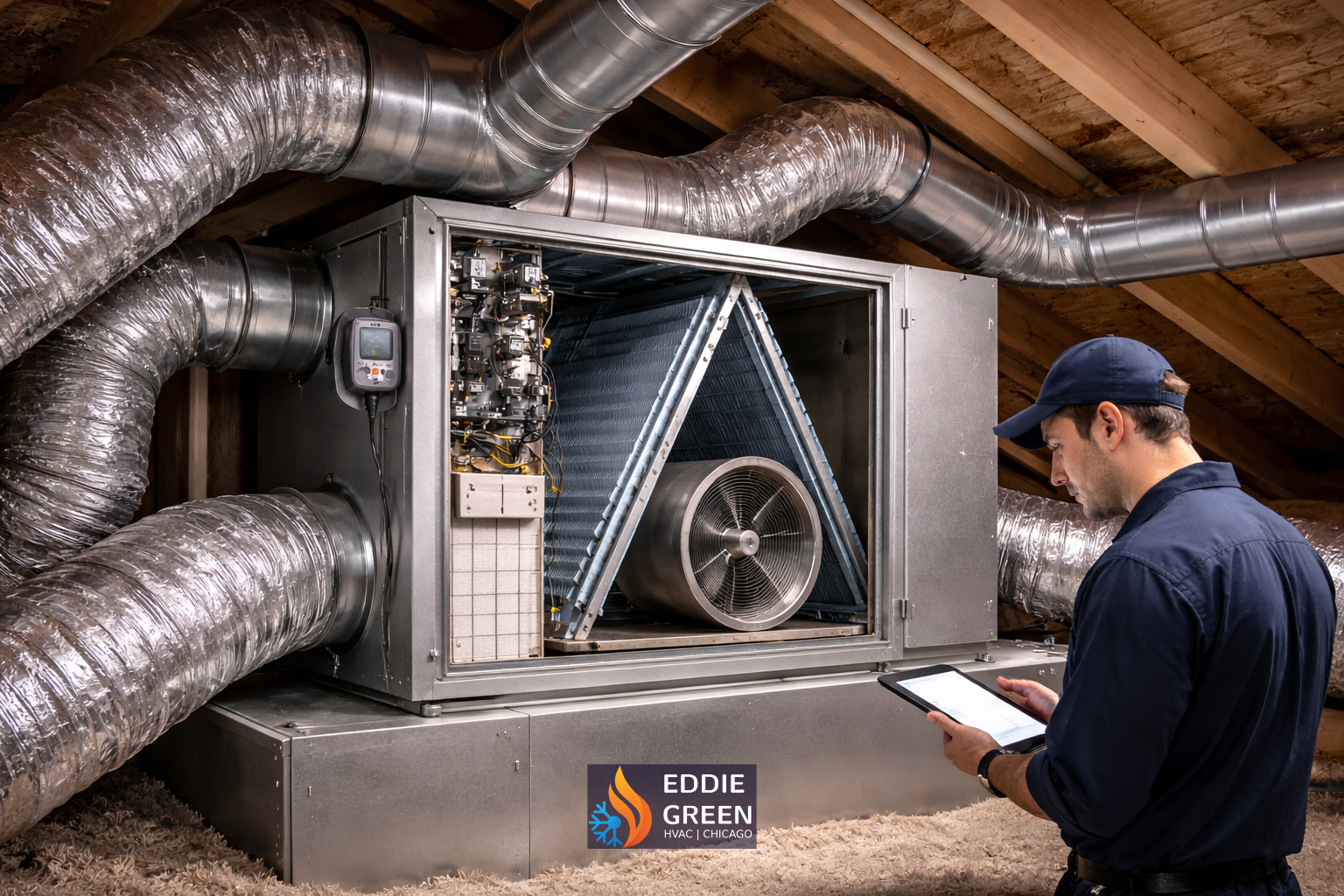
Leaks in attics, crawl spaces, and basements are especially troublesome because air escaping there is usually conditioned air that you've already paid for. In summer, cooled air is lost into hot attic spaces. In winter, heated air escapes into cold, unconditioned areas. The system then has to work harder to make up the difference, driving up utility costs.
Poor insulation and temperature loss
Even sealed ducts can underperform when they aren't insulated properly. In unconditioned spaces, the air temperature inside the duct can change before it reaches the intended room. This is especially important in Chicago, where homes experience both cold winters and hot, humid summers. Poor insulation can cause large temperature swings and make rooms feel inconsistent even when the thermostat is set correctly.
Insulated duct runs help preserve supply-air temperature and reduce the energy needed to condition each room. In older homes, upgrading insulation around ducts can be a cost-effective way to improve system response without replacing the entire HVAC unit. It can also help reduce condensation on cold ducts, lowering the risk of moisture-related problems.
Blockages, crushed ducts, and poor layout
Ducts can also fail mechanically. A crushed flexible duct, accumulated dust buildup, or a poorly designed layout can restrict airflow and reduce system efficiency. When airflow is restricted, some rooms may feel under-conditioned while others become too hot or too cold. This imbalance often leads homeowners to keep adjusting the thermostat, which doesn't solve the root issue.
For homes experiencing airflow problems, it's often helpful to compare the symptoms with broader system-sizing concerns. Our guide to HVAC system sizing explains how capacity and distribution work together. Our residential AC installation service includes duct checks and performance testing to help prevent distribution issues from the start.
How Duct Leaks Affect Energy Efficiency and Cost
The hidden cost of lost conditioned air
When ducts leak, your HVAC system is effectively conditioning spaces that don't benefit your household. This wasted air increases runtime, which translates into higher utility bills and more frequent cycling. If multiple rooms feel uncomfortable, it's tempting to blame the furnace or air conditioner, but the real problem may be that the air never reaches the rooms in the first place.
Research and field experience consistently show that duct sealing can deliver meaningful savings. In many homes, especially older buildings with long duct runs or difficult access points, leaks are a major source of avoidable energy waste. The impact is even more noticeable when ductwork runs through attics or basements, where extreme temperatures magnify losses.
How advanced sealing technologies improve results
Traditional methods like tape and mastic are still used, but they may not reach hidden leaks inside walls or behind finished surfaces. Newer solutions, such as Aeroseal technology, seal ducts from the inside out and can reduce air loss dramatically. In some cases, reported results show up to a 95% reduction in leakage, which can make a big difference in comfort and efficiency.
This is especially valuable for complex systems or hard-to-access duct networks. If you're interested in modern approaches to duct remediation, our commercial HVAC installation service and Downtown Chicago service area page reflect how performance-focused HVAC work often includes duct analysis, not just equipment replacement. For a technical perspective on pressurized duct sealing methods, the U.S. Department of Energy also discusses common causes of leakage in its Energy Saver Duct Guidance.
Why is return on investment often strong?
Homeowners often ask whether duct sealing is worth the cost. In many cases, the answer is yes, because the savings appear in more than one place. Lower utility bills are the most obvious benefit, but improved system performance can also reduce repair frequency and extend equipment lifespan. When the HVAC system doesn't have to work as hard, the blower, compressor, and burner experience less stress.
That combination of energy savings and equipment protection is why duct improvements are often considered one of the smartest upgrades for an existing home. If a system seems to run constantly but still fails to maintain comfort, ductwork should be evaluated before assuming the equipment itself is failing.
Indoor Air Quality: The Ductwork Connection
Ducts can circulate more than conditioned air.
Indoor air quality heavily depends on what moves through the duct system. If ducts pull in dust from a crawl space or attic, those contaminants can be spread throughout the home. This matters because modern homes are often tighter than older ones, so pollutants may linger indoors longer than expected. The result can be stuffy air, dust accumulation, and irritation for sensitive occupants.
Good duct design and proper sealing reduce the amount of unwanted material entering the system. They also support cleaner filtration because the system is less likely to bypass filters through leaks or gaps. For households with pets, allergies, or frequent respiratory symptoms, duct performance can make a noticeable difference in day-to-day comfort.
Humidity and condensation issues
Moisture is another concern. Leaky or poorly insulated ducts can sweat when warm, humid air meets cold duct surfaces, especially during the cooling season. That condensation can lead to mold growth or water damage if left unresolved. Over time, moisture problems may affect not only air quality but also building materials around the ducts.
Proper insulation, balanced airflow, and routine inspections reduce these risks. In homes with recurring moisture issues, a duct review should be part of the diagnostic process. It's far better to address moisture at the duct level than to keep treating symptoms elsewhere in the home.
Better filtration starts with better airflow.
When airflow is stable and balanced, filters can do their job more effectively. If duct pressure is off or leaks are pulling in dirty air, filtration systems have to work harder and may still miss contaminants. That's why clean ducts aren't a filtration replacement, but they do improve the overall performance of the filtration system.
For homeowners considering broader indoor air upgrades, pairing duct maintenance with regular system service is a practical move. Our residential furnace repair service and residential AC repair service can help when comfort problems are tied to airflow, temperature swings, or unusual system behavior.
Advanced Duct Sealing and High-Velocity HVAC Trends
Aeroseal and inside-out sealing
One important trend in duct improvement is the use of advanced sealing technologies. Aeroseal-style systems pressurize ducts and release sealant particles that find leaks from the inside. This process can reach hidden gaps that are difficult or impossible to fix with traditional methods, especially in finished homes. For many older properties, that makes it a highly efficient solution.
The technology is particularly useful when duct runs pass through walls or other inaccessible spaces. Instead of tearing into drywall or removing major sections of the system, contractors can address leaks with less disruption to the home. That's a major reason advanced sealing is gaining attention among both homeowners and HVAC pros.
High-velocity systems for older homes
Another important development is the growing popularity of high-velocity HVAC systems. These systems use smaller, flexible ducts that can be threaded through older homes with minimal remodeling. They're especially helpful in vintage properties that weren't originally built with central ductwork in mind. In many cases, this allows homeowners to add modern comfort without compromising the building's character.
High-velocity systems are also useful when there's limited space for large conventional ducts. The smaller ducts can support even air distribution while reducing the need for major structural changes. That makes them a strong option when a property needs both efficiency and architectural preservation. If you're comparing system options, our mini-split article and residential furnace installation service can help you understand how different heating and cooling approaches fit different homes.
What these trends mean for homeowners and contractors
For homeowners, these innovations mean there are more ways to solve comfort problems than simply replacing equipment. For contractors, they create opportunities to deliver more tailored, high-value solutions. The best approach depends on the home’s age, layout, insulation, and current duct condition. That's why a careful inspection matters before making any upgrade decisions.
For a real-world example, the University of Chicago used custom air dispersion systems to maintain precise low-velocity airflow in laboratories, showing how much duct design can matter when conditions must be controlled carefully. While residential homes are different from laboratories, the principle is the same: the right air delivery strategy changes performance outcomes in a meaningful way. That same mindset is useful when evaluating comfort problems in homes and small commercial spaces.
How to Tell If Your Ductwork Needs Attention
Uneven temperatures in different rooms
One of the easiest warning signs is a home where certain rooms are always too hot or too cold. If one bedroom is comfortable while another never seems to reach the thermostat setting, a duct imbalance may be the cause. This issue often becomes more noticeable during temperature extremes when the system is working hardest.
Uneven temperatures can also point to sizing issues, poor duct layout, or hidden leakage. That's why it's important not to assume the thermostat is the problem. The thermostat may simply be responding to a distribution issue elsewhere in the system.
Rising energy bills without a clear reason
If bills climb even though your usage habits haven't changed, inefficient ductwork is worth investigating. Leaks, insulation loss, and pressure problems all force the HVAC unit to work longer and harder. Over time, that hidden inefficiency becomes expensive. The best way to diagnose it is with a full system assessment rather than guesswork.
Our HVAC problem-spotting guide offers a simple framework for identifying issues before they lead to bigger repairs. It's often the small warning signs, not the dramatic failures, that reveal duct trouble early.
Dust, noise, and visible damage
Other signs include excessive dust near registers, rattling sounds in the ductwork, or visible kinks and tears in flexible duct sections. Any of these symptoms can indicate that air isn't moving the way it should. If you notice a return grille pulling in debris from nearby spaces or a supply register that seems weak, the duct system deserves attention.
It's also wise to inspect accessible duct sections seasonally, especially after major weather changes or renovation work. Even minor damage can affect performance if left unresolved.
Best Practices for Ductwork Maintenance
Schedule routine inspections
Regular inspections help identify problems before they become costly. A technician can check for leaks, disconnected joints, crushed sections, poor insulation, and airflow imbalances. This is one of the most effective ways to preserve comfort while protecting your HVAC investment. In fact, a routine inspection often reveals issues that homeowners would never spot on their own.
As part of a broader maintenance plan, duct evaluation should happen alongside furnace and AC tune-ups. Our seasonal maintenance guide explains how system care should follow the seasons, while our preventative maintenance service helps keep performance steady year-round.
Seal and insulate exposed ducts.
If ducts run through attics, basements, or garages, sealing and insulation are essential. These areas are rarely at ideal indoor temperatures, so exposed ductwork loses efficiency quickly. The combination of sealing and insulating helps preserve the air temperature and reduce energy waste. It also helps minimize condensation on cold supply lines during the summer.
In many homes, this upgrade can pay off through both improved comfort and reduced utility costs. It's one of the most practical ways to improve a system without replacing the entire HVAC unit.
Keep airflow balanced and systems clean.
Balanced airflow is just as important as sealing. If registers are blocked by furniture, return grilles are covered, or filters are neglected, the system may become pressurized unevenly. That can create noise, reduce performance, and shorten equipment life. Keeping vents clear and changing filters on schedule are simple but powerful habits.
For homeowners who want a broader upgrade path, addressing ducts at the same time as a furnace or AC replacement can create much better long-term results. It's one reason professional installation should always include a duct review, not just equipment replacement.
What Homeowners and Businesses Can Learn from Real-World Examples
Chicago homes and dramatic leakage reductions
In one reported Chicago home case, Aeroseal technology reduced duct leakage by 96%, which led to roughly $600 in annual savings on heating and cooling costs. That kind of result shows how much hidden waste can exist in a system that otherwise appears functional. It also demonstrates that duct sealing is not a minor detail—it can be a major efficiency improvement.
For a climate like Chicago’s, where heating and cooling demands are both significant, those savings can matter quickly. The long-term benefit is not only lower bills but also reduced stress on the equipment and more stable indoor comfort throughout the year.
Commercial spaces benefit too.
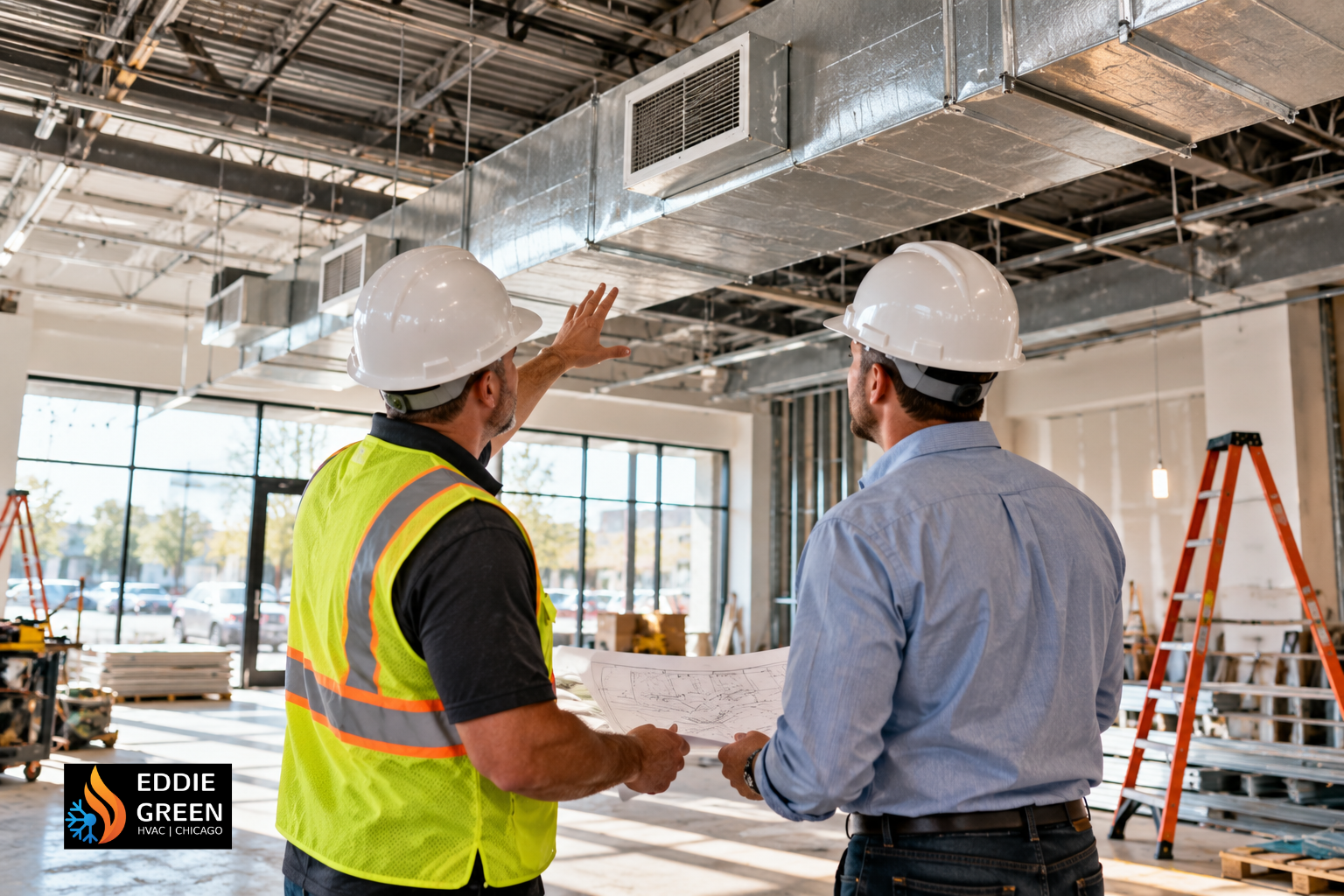
Duct performance is not just a residential issue. In commercial properties, poor airflow can affect employee comfort, customer experience, equipment sensitivity, and operating costs. Businesses that overlook ductwork may find themselves paying more for less comfort, especially in buildings with mixed-use or older construction. That's why commercial system design often includes careful airflow planning from the start.
Our commercial HVAC installation service is designed with that level of planning in mind, because the duct network influences performance just as much as the equipment itself. For building owners, that means better design choices upfront and fewer performance problems later.
Older homes need special planning.
Vintage homes often have unique challenges: tight framing, limited chase space, and layouts that weren't built for modern central HVAC. In these cases, ductwork must be designed to fit the building rather than forcing the building to fit the system. High-velocity systems and targeted duct sealing can be effective solutions when handled by experienced professionals.
That's also why a one-size-fits-all approach rarely works. The best duct strategy depends on the home’s age, construction style, and comfort goals. A thoughtful assessment prevents wasted spending and helps ensure that upgrades actually solve the problem.
Frequently Asked Questions About Air Ducts and HVAC Performance
How often should ducts be inspected?
Most homes benefit from a professional duct inspection every few years, or sooner if there are signs of uneven temperatures, rising bills, or visible damage. If your home has had renovations, water issues, or pest problems, an inspection should happen sooner. Ducts can be affected by conditions that are invisible from the living space, so periodic evaluation is worthwhile.
Is duct sealing worth the investment?
Yes, especially when the home has measurable leakage or inconsistent comfort. Sealing can improve efficiency, reduce system strain, and help stabilize temperatures across the home. In many cases, the savings and comfort gains make it a high-value upgrade compared with more expensive equipment changes.
Can duct problems shorten HVAC system life?
Absolutely. When airflow is restricted or air is lost before it reaches the rooms, the system must operate longer and under more stress. That added strain can increase wear on moving parts and raise the risk of breakdowns. Addressing duct problems early is one of the best ways to protect the lifespan of your equipment.
Conclusion: The Hidden Network That Determines HVAC Success
Air ducts play a far bigger role in HVAC performance than many people realize. They influence how efficiently air moves, how evenly rooms are conditioned, how clean the indoor environment feels, and how long the equipment lasts. A strong HVAC system is not just about the furnace or air conditioner itself; it is about the entire delivery network working as one.
If you are dealing with uneven temperatures, higher bills, or comfort issues that never seem to go away, your ductwork should be part of the conversation. The good news is that many duct problems are fixable through sealing, insulation, maintenance, or smarter system design. For help evaluating the full picture, explore our residential AC installation, furnace repair, and annual HVAC maintenance guide. If you want expert support from a local team, contact Eddie Green HVAC at (224) 857-3327 or visit our website to schedule an inspection and take the next step toward better comfort, efficiency, and indoor air quality.