Why a New Boiler Matters More Than You Think
Waiting until your old boiler breaks down isn't the best plan. A new boiler isn't just about swapping out the old for the new; it's about making your home more comfortable, cutting down on energy waste, and keeping your home's value intact. If your current boiler is noisy, keeps your rooms unevenly heated, or needs constant repairs, it might be time to consider a professional residential boiler installation.
In Chicago, winters can be harsh, so you need a reliable heating system. Picking the right boiler and having it installed correctly can really boost your comfort, slash your utility bills, and reduce how often you need repairs. The U.S. Department of Energy points out that heating equipment is a big energy user, so the right system can significantly impact your costs. Check out our heating system risks guide for more insights on when a replacement is due.
In this article, we’ll cover what you need to know before installing a new boiler, how to weigh your options, and when it's smarter to replace than repair. Plus, we'll guide you through preparing for installation day and what to expect afterward.
Signs Your Current Boiler May Be Ready for Replacement
Frequent repairs and rising service calls
If your boiler needs repairs more than it should, it might be time to think about a new system. Frequent problems can mean parts are wearing out, efficiency is dropping, or the system is just struggling. When repair costs start creeping close to the price of a new boiler, it's often smarter to invest in a replacement. To explore your repair options, our residential boiler repair service can help you decide if your system is worth fixing.
Uneven heat and discomfort in the home
Your boiler should provide consistent warmth. If some rooms are too cold and others too hot, your system might not be up to the task anymore. This could be due to aging controls or circulation issues, but sometimes it means the system can't handle your home’s needs. If you find yourself adjusting the thermostat too often, a replacement might resolve these issues. For help with system performance during shoulder seasons, our preventative maintenance service can identify root causes.
Age, corrosion, and visible wear
Just because a boiler is old doesn't mean it's done for, but older units are more prone to problems. Signs like corrosion, leaks, rust, or pressure issues suggest aging. Over time, these boilers lose efficiency, especially without regular maintenance. For a deeper look at what to check in older systems, the ENERGY STAR guide can be a handy resource.
Choosing the Right Boiler for Your Home
Fuel type and energy goals
Boilers come in various fuel types, and the best one for you depends on your home, access to utilities, and energy goals. Natural gas is popular because it's readily available and can power high-performing systems. But some homes might use propane or oil. It's about finding a balance between performance, costs, and availability.
Think about your future energy usage too. If cutting down on bills is key, compare efficiency ratings and long-term fuel costs. The U.S. Department of Energy overview can offer insights into why efficiency matters.
Proper sizing for comfort and efficiency
A common mistake in boiler replacement is choosing the wrong size. A small boiler might not heat your home well, while a big one can waste energy and wear out quickly. Sizing should consider your home’s square footage, insulation, windows, layout, and heat loss. That's why getting a professional installer is crucial. They’ll assess your home as it is today, factoring in any changes like insulation upgrades or additions. For more on system sizing, check our furnace installation page.
High-efficiency models and long-term savings
High-efficiency boilers cost more initially but can save you money on energy bills over time. They extract more heat from the fuel, leading to less waste. For many, the long-term savings make them a smart choice, especially in a city with long winters.
But efficiency isn't everything. Reliability, warranty, and compatibility with your current system are just as important. The best choice balances all these factors. For larger properties, our commercial HVAC installation service offers a broader planning perspective.
What Happens During a Professional Boiler Installation
Home assessment and planning
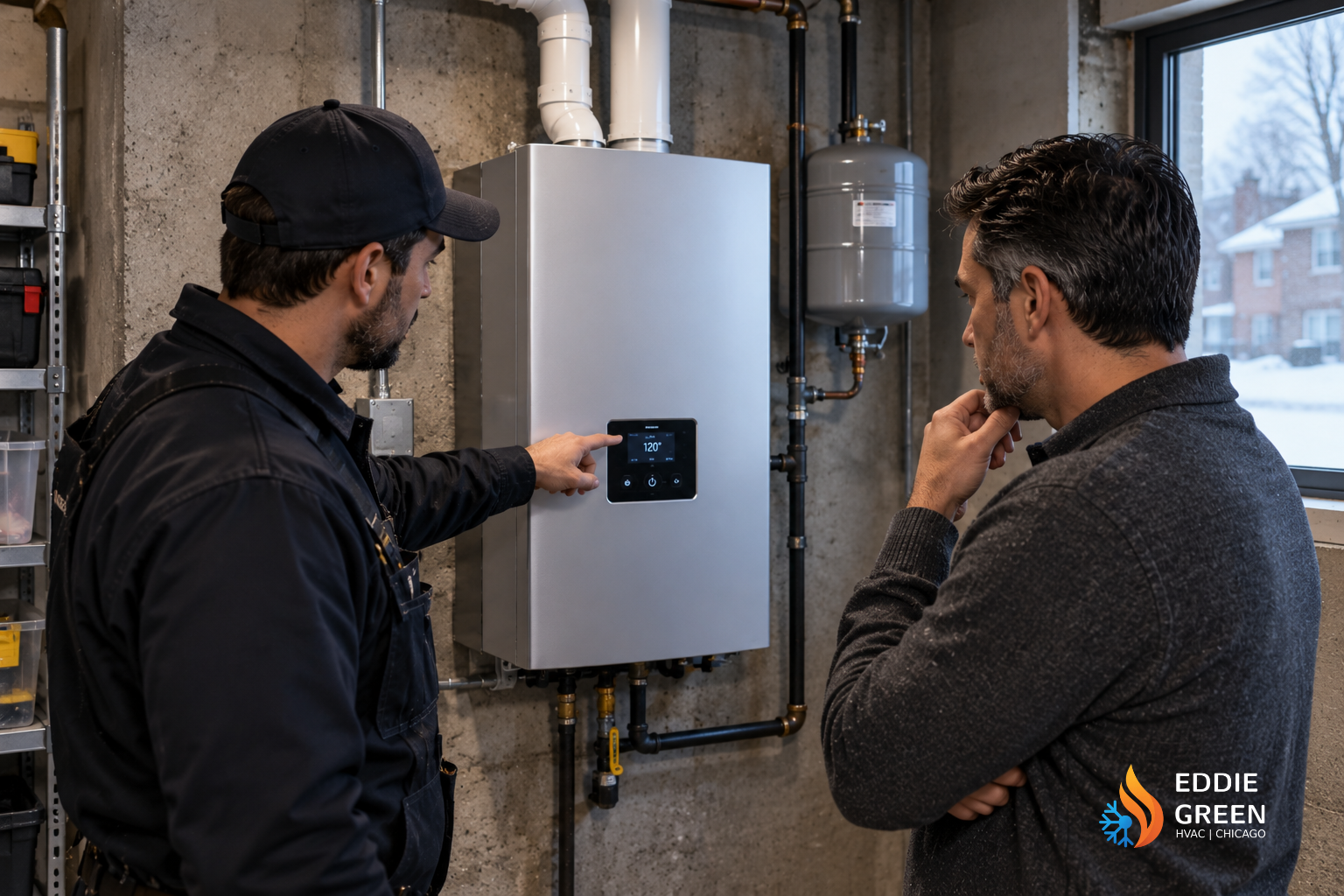
A quality installation starts with a thorough home assessment. The contractor checks your current system, heating needs, piping, and venting. This ensures your new boiler works effectively.
During planning, discuss equipment options, timelines, and any necessary updates. Clear communication makes the process smoother and ensures your system works right from the start.
Removal of the old boiler and system preparation
When installation starts, the old boiler is safely removed, and the area is prepped for the new one. This might involve cleaning, updating piping, and checking venting. These small details can make a big difference in how your new system performs.
Preparation is vital because a boiler's performance depends on more than just the unit. If supporting components are neglected, even a new boiler can underperform. A good installer will inspect the whole setup.
Testing, calibration, and final checks
After installation, the system is tested to ensure it operates safely and heats effectively. This involves checking thermostat response, pressure, burner function, and safety controls. A good installation isn't complete until everything is verified under real conditions.
Testing gives homeowners confidence that their new boiler is ready for winter. Catching issues early makes them easier to fix.
How to Prepare Your Home for Boiler Installation
Clear access to the mechanical area
Before the installation crew arrives, clear the space around the boiler. Remove any stored items that could get in the way. A clear path also helps the team move equipment and supplies efficiently.
Make sure there's an easy path from the entry point to the mechanical area. This simple step can make the day go more smoothly.
Ask questions about permits and timing.
Depending on the replacement scope, permits or inspections might be needed. Your contractor should explain what's required and who handles the paperwork. Never be left wondering if things were done to code.
Also, ask how long the project will take and if your heat will be off for a while. Knowing the schedule helps you plan around family needs.
Plan for comfort during the transition
If your boiler is already out of action, plan for the transition period. Dress warmly, consider temporary space heaters, and have a strategy for cold-sensitive family members. A little preparation can make the process much easier.
Thinking about broader heating support? Our furnace performance guide offers tips for building a reliable heating plan.
Boiler Installation Costs: What Affects the Price
Equipment quality and system features
Boiler installation costs vary based on the model, efficiency, and features. A standard replacement might be cheaper than a high-efficiency system with advanced controls. Focus on value, not just price, since the cheapest option may not offer the best results.
Higher-quality systems often come with better warranties and reliability. Consider a new boiler as a long-term investment, not just a quick fix.
Labor, complexity, and required upgrades
Labor costs depend on project complexity, existing system condition, and any necessary upgrades. Older homes might need venting changes, pipe adjustments, or electrical work. These can hike up costs, but they're often essential.
Be wary of quotes that seem too low; they might skip important steps. A professional job covers everything needed for safety and efficiency. This attention to detail is crucial, especially in Chicago’s harsh winters.
Long-term savings versus short-term expense
When weighing costs, think beyond the initial price. A more efficient boiler can cut utility bills, and a well-installed system may need fewer repairs. Over time, these savings might make a pricier boiler the smarter choice.
Regular upkeep is important too. Consistent care through our seasonal preventative maintenance helps keep systems efficient and reliable.
Common Mistakes Homeowners Should Avoid
Choosing the wrong size
Getting the size right is crucial. An oversized boiler wastes energy, while an undersized one struggles to heat your home. Always ask how size decisions are made and what factors were considered.
Your contractor should explain your home's heating needs clearly. If explanations are vague, ask more questions before proceeding.
Ignoring venting or piping issues
Even a top-notch boiler can underperform if its venting or piping is outdated. These parts help the boiler run safely and effectively. Skipping them during replacement can cause problems later.
A good installation checks the whole system, not just the boiler. Expect your installer to recommend any necessary corrective work.
Delaying replacement too long
Waiting for a complete failure can be costly. Emergency replacements limit your options and create stress. Planning ahead gives you more control and better results.
If your system shows serious warning signs, consider replacement before winter hits hard. Being proactive usually pays off in the long run.
Why Professional Installation Makes the Difference
Safety, compliance, and reliability
Boilers involve complex systems, so don’t treat installation as a DIY project. Professional installation protects your home from safety risks and performance issues. A properly done job is more reliable and efficient.
Professionals understand local codes and handle details to ensure compliance. This attention to detail reduces stress and supports long-term reliability. If your boiler fails and you need help, our repair team can guide the next steps.
Better performance and fewer callbacks
An expertly installed boiler heats your home evenly and responds well to thermostat changes. Poor installation, on the other hand, can cause frequent issues. Investing in quality work upfront saves time and money later.
Professionals also test the system after installation, catching small issues before they grow. You deserve a system that works smoothly.
Support beyond installation day
The best service doesn't end when the crew leaves. It includes guidance on maintenance, troubleshooting, and seasonal care. This support ensures your system runs well year after year.
For more on heating and cooling support, check out our HVAC care guide. Combined with a strong installation, regular maintenance ensures dependable performance.
Frequently Asked Questions About New Boiler Installation
How long does a boiler installation take?
Most boiler replacements finish in a day, but complex projects might take longer if upgrades are needed. Your contractor should explain the expected timeline before starting.
Should I repair or replace my boiler?
If your boiler is fairly new and the problem is minor, repair might be best. But if it's older, inefficient, or needs frequent repairs, a replacement could be the smarter choice. A professional assessment helps weigh short-term repair costs against the benefits of a new system.
What maintenance does a new boiler need?
Even new boilers need regular care to keep running efficiently. Annual inspections, cleanings, and system checks help prevent issues and extend life. Watch for leaks, unusual noises, and uneven heating between services.
How do I know if the installation was done correctly?
Your system should heat evenly and respond well to thermostat settings. Your contractor should review the equipment and maintenance needs with you. If unclear, ask for a full walkthrough before considering the job complete.
Final Thoughts: Make Your Boiler Upgrade a Smart Investment
Choosing a new boiler is a big decision, but it doesn't have to be daunting. Knowing the signs of failure, the importance of proper sizing, and the value of professional installation helps you make a confident choice. The right system boosts comfort and supports your home through many winters.
If you're exploring options, the best next step is a professional evaluation of your current system and home’s needs. Whether you need help deciding between repair and replacement, want to compare equipment, or are ready for installation, Eddie Green HVAC is here to help. Reach out to us and schedule a consultation for residential boiler installation that focuses on comfort.
For immediate questions or to speak with a heating professional, visit our website or call (224) 857-3327. A better heating season starts with the right plan, the right equipment, and the right team.