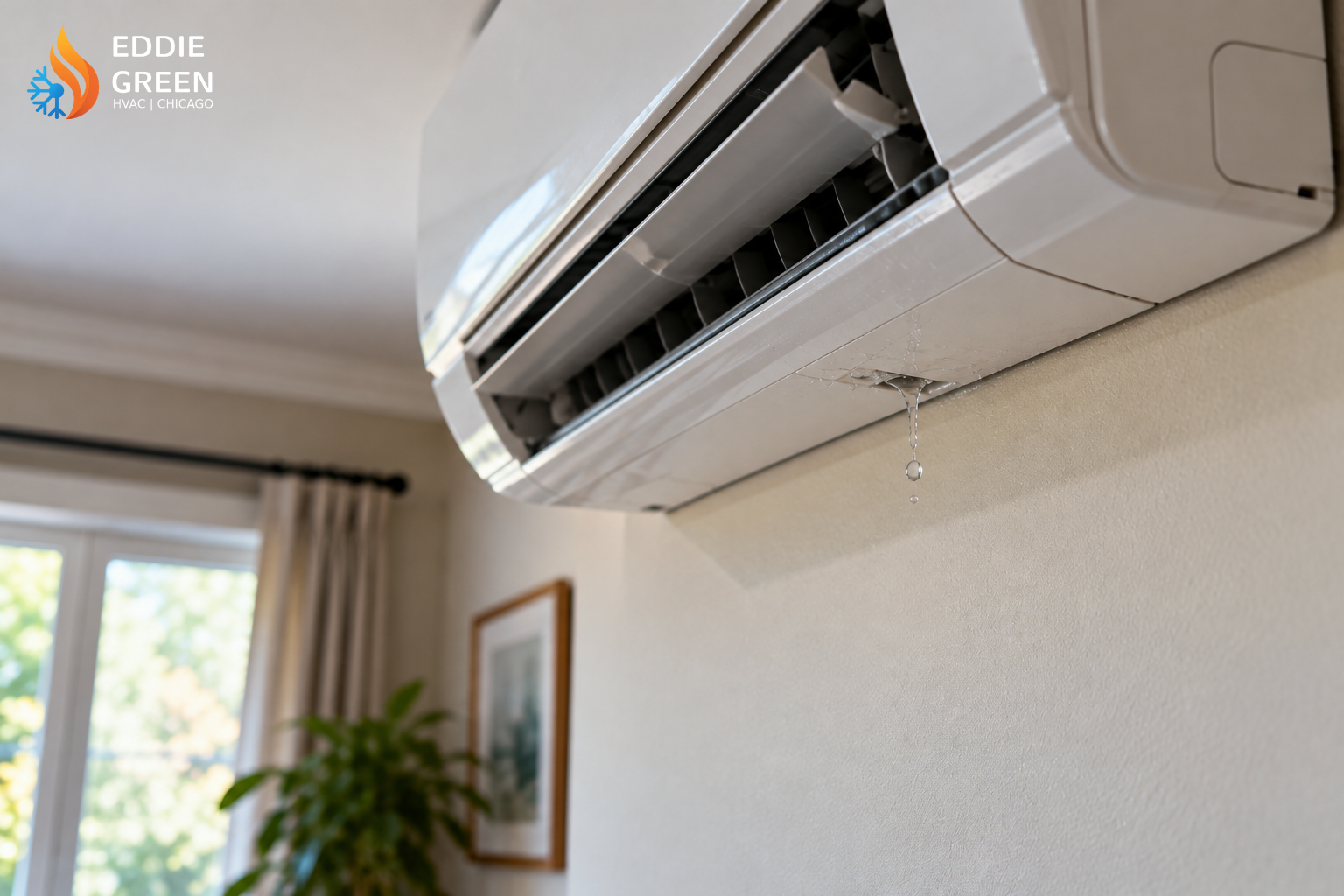
Noticing water dripping from your air conditioner might seem like a minor hassle, but it often points to a problem that can become costly quickly. A small puddle near the indoor unit could lead to damaged drywall, warped floors, mold growth, and even electrical problems if you don't tackle the issue right away. If you're facing this in the middle of summer, quick residential AC repair can stop a small leak from turning into a big home repair bill.
Indoor AC leaks often happen because of clogged drain lines, dirty coils, frozen evaporator coils, or a broken condensate pump. The upside is many of these issues can be spotted, and some can be avoided with regular care like seasonal furnace and AC maintenance. Let's dive into why AC units leak, the risks of ignoring this problem, and what steps you should take to protect your comfort and home.
If you're curious about how cooling systems can fail, understanding signs of airflow and refrigerant troubles is helpful. Check out our guide on why your AC is running but not cooling properly to learn about related symptoms that often show up before a leak. Knowing both problems can help you catch issues early and make smarter repair decisions.
Why AC Units Leak Water Indoors
Condensation Happens, But It Needs Proper Drainage
Air conditioners remove humidity from your home as they cool. This moisture condenses on the evaporator coil and is supposed to drain into a pan and out of the house through a condensate line. According to the U.S. Department of Energy, proper drainage is crucial for both humidity control and cooling performance. When the drainage path is blocked or damaged, water starts collecting where it shouldn't.
When there's a leak, it usually means the system is producing water correctly but failing to move it away. This can be due to a clogged drain line from algae or debris, a cracked drain pan, an unlevel unit, or a coil that freezes and then melts suddenly. Since the problem often involves multiple parts, a professional diagnosis can quickly determine if you need a simple fix or a more involved residential AC installation for older equipment.
Frozen Coils Can Lead to Unexpected Puddles
Frozen evaporator coils are a common reason for AC leaks indoors. When airflow is restricted by a dirty filter, blocked return vents, or failing blower parts, the coil gets too cold and ice forms. Once the system shuts off or the ice melts, the water can overwhelm the drain pan and spill over.
That's why you shouldn't treat a leak as an isolated issue. It often points to an airflow or performance problem affecting the whole system. If you've noticed weak airflow, warm air from vents, or frequent cycling, the leak might be part of a larger problem that needs attention before more damage occurs.
Hidden Risks of Ignoring an AC Water Leak
Moisture Damage Extends Beyond the Unit
Water around an indoor air handler can soak carpets, stain ceilings below attic equipment, and weaken subflooring over time. Even a slow leak can create a persistent damp spot that's expensive to fix later. Homeowners often underestimate how quickly water travels inside walls or under floors, especially if the leak is hidden behind a furnace closet or in a utility space.
Insurance claims for water damage can get tricky if the problem was ignored after warning signs. Acting early is usually cheaper than fixing structural damage, replacing insulation, or cleaning up mold. If the leak appears alongside other system issues, like unusual noises or poor airflow, you might want to check out our article on strange furnace noises and what they mean, as the same system may be showing more than one problem.
Mold Growth: A Health and Air Quality Concern
The U.S. Environmental Protection Agency explains that damp indoor environments can support mold growth, affecting air quality and living conditions. A leaking AC can keep nearby materials damp, allowing mold to grow on drywall, insulation, or framing. This risk increases if the leak is hidden, ongoing, or paired with high indoor humidity.
For families with asthma, allergies, or respiratory issues, this goes beyond a property problem. It can become a comfort and health issue. Signs like a musty smell near the unit, dark spots around vents, or worsening allergy symptoms suggest the leak might already be affecting your indoor environment.
Moisture and Electrical Parts Don’t Mix
An air conditioner has wiring, controls, and electrical connections near or inside the indoor unit. When water leaks into those areas, corrosion and shorting become real worries. Sometimes, the system may trip breakers, fail to start, or act unpredictably because moisture reached sensitive parts.
This is why you should never assume a water leak is harmless. Even if the unit still cools, hidden moisture around electrical parts can make a repair more urgent than it seems. If you think water has reached wiring or control boards, turn the system off and have it checked before using it again.
Common Causes of AC Leaking Water Inside the Home
Clogged Condensate Drain Line
The condensate drain line carries moisture away from the indoor unit. Over time, it can collect algae, dust, slime, and debris that slow or stop drainage. When that happens, water backs up into the drain pan and eventually overflows. It’s often a simple problem to fix but should be handled carefully to prevent future clogs.
Drain line issues are especially common in systems that haven’t had regular maintenance. A seasonal tune-up, like furnace maintenance with cooling care, often includes a drain check to prevent this problem. Maintenance visits also let technicians spot pan wear, minor leaks, and drainage problems before they spread into the home.
Dirty Evaporator Coils
Dirty coils block heat transfer and can cause the evaporator to get too cold. This can lead to freezing and then thawing in a surge, causing indoor leaks. Dirty coils also make the system work harder, increasing energy use and lowering comfort.
Cleaning coils isn’t always a DIY task, especially if the equipment is hard to access or if the system is showing multiple symptoms. If the coil problem is severe, it might indicate broader maintenance needs or even improper installation. In older systems, it can also be part of the decision process between repair and replacement, especially when comparing repeated service costs to a new air conditioning installation.
Low Refrigerant or Airflow Issues
Low refrigerant often causes the evaporator coil to freeze. Airflow restrictions have a similar effect. Either way, the ice that forms eventually melts, creating more water than the drain system can handle. This is why leaking water and weak cooling often appear together.
Technicians usually check for refrigerant leaks, fan performance, filter condition, and duct restriction when diagnosing this problem. A well-balanced system should move air smoothly across the coil and drain condensation predictably. When it doesn’t, the leak is usually a sign of a larger performance imbalance, not a stand-alone issue.
Cracked Drain Pan or Broken Condensate Pump
Older drain pans can rust, crack, or warp. If the pan doesn’t collect water properly, overflow can happen even if the drain line itself is clear. Homes with condensate pumps may also see leaks if the pump fails or loses power, since the water has nowhere else to go.
These failures are easy to miss if the system is tucked away in a closet, attic, or basement. That’s why checking around the indoor unit regularly for rust, standing water, or stains is helpful. A quick visual check every few weeks during peak cooling season can save time and money later.
What You Can Safely Check Before Calling for Help
Look at the Air Filter and Vents
One of the simplest checks is the air filter. A clogged filter reduces airflow, which can lead to frozen coils and water leaks. Replace it if it’s dirty, and make sure supply and return vents aren’t blocked by furniture, curtains, or rugs.
Good airflow supports both efficiency and drainage. If your home still feels humid, warm, or uneven after a filter change, the problem is likely deeper than the filter alone. That’s when a licensed HVAC technician can decide whether you need a targeted repair or a more complete service plan.
Check for Ice or Strange Sounds
If you see ice on the refrigerant lines or around the indoor coil cabinet, turn the system off and let it thaw before using it again. Running a frozen system can worsen the leak and stress the compressor. Unusual humming, rattling, or gurgling sounds may also mean the system is struggling.
If the unit leaks only after running for a long time, that clue can help narrow down the cause. It may point to a drainage obstruction, a freezing issue, or a pump failing under load. Documenting when the leak happens can help the technician diagnose it faster and more accurately.
Inspect Around the Unit for Clues
Look for rust, staining, wet insulation, or water trails leading away from the indoor unit. If the leak is near a ceiling or wall cavity, check below and around the system for damp drywall or flooring. These visible signs often reveal whether the problem is new or has been happening for a while.
If the leak is in a space where you smell mildew or see repeated moisture, don’t wait too long to act. What starts as a minor drainage issue can slowly become a mold and material damage issue if left alone. Early intervention is almost always cheaper than cleanup later.
When an AC Leak Means You Need Professional Repair
Repeated Leaks or Recurring Ice Are Red Flags
If the leak keeps coming back after basic checks, a professional diagnosis is likely needed. Recurring water around the unit can indicate refrigerant problems, a misaligned drain pan, improper slope, airflow restriction, or an electrical issue that's not visible from the outside. Sometimes, the best solution is a simple repair; other times, the system is nearing the end of its useful life.
Homeowners who already know they have other system concerns might want a broader inspection that includes the whole comfort system. Services like preventative furnace and AC maintenance can identify pattern failures before they become emergencies. This is especially useful for older equipment or homes with past drainage trouble.
Water Damage Around Electrical or Structural Parts
If water has reached wiring, a furnace cabinet, ceiling materials, or finished flooring, don’t delay. These situations are not just inconvenient; they can become safety issues and pricey property problems. Professional repair should happen before additional operation causes more harm.
In homes with finished basements or tight utility closets, the cost of delay can escalate quickly. A leak that looks small on day one may spread under flooring or into adjacent rooms by day three or four. Prompt action protects both the equipment and the home itself.
Older Systems May Need a Strategic Fix
Sometimes the leak is a symptom of an aging system that has reached the point where repair is no longer the best long-term choice. If the unit has recurring breakdowns, weak cooling, and rising energy bills, replacement may offer a better return. A technician can help compare repair costs with the benefits of new equipment and improved efficiency.
This is especially important for homes where the indoor unit is hard to service or where previous repairs were only temporary. In those situations, a full inspection can help you decide whether to keep repairing the current setup or move toward a new installation that restores reliability.
How Regular Maintenance Prevents AC Water Leaks
Seasonal Tune-Ups Keep Drainage Paths Clear
Routine maintenance is one of the most reliable ways to avoid indoor AC leaks. During a service visit, a technician can inspect the drain pan, flush the drain line, check coil condition, and confirm that airflow and temperature differences are within normal range. This helps catch small problems before water escapes into the home.
Many homeowners don’t realize how much of a maintenance appointment is prevention. A clean drainage system, proper airflow, and stable refrigerant performance all work together to keep condensation moving in the right direction. If you want to protect your home before the next heat wave, a preventive plan like seasonal furnace and AC maintenance is a practical investment.
Maintenance Extends Equipment Life and Boosts Efficiency
According to ENERGY STAR, maintaining HVAC systems helps them run more efficiently and reduces the strain that leads to early failure. When a system is cleaner and more balanced, it’s less likely to freeze up, overflow, or stress its parts, meaning lower repair risk and better comfort over time.
Maintenance also lets technicians spot early signs of wear, such as a weakening blower motor or a drain pan starting to corrode. These small issues often cost much less to fix early than after they cause water damage. Preventive care isn’t just about comfort; it’s about avoiding unnecessary expenses.
Homeowners Can Support the System Between Visits
Even with professional maintenance, there are a few habits that help. Replace filters on schedule, keep the area around the indoor unit clear, and watch for unusual moisture or odors. If you notice the system working harder than normal, don’t ignore it just because the house is still cooling.
For homes in Chicago and nearby suburbs, weather swings can put extra stress on cooling systems. Heavy humidity one day and cooler nights the next can create fluctuating loads that expose weak drainage or airflow. Staying proactive with service is the best way to prevent those conditions from becoming leak problems.
What to Do Right Now If Your AC Is Leaking Water
Turn the System Off if Water Is Spreading
If water is actively pooling, shut the AC off to reduce the chance of further damage. Place towels or a container under the leak if needed, but avoid opening panels or handling wiring unless you’re qualified. If you see ice, let the system thaw before restarting it.
Turning the system off doesn’t fix the root cause, but it can limit damage while you arrange service. That small step can make the difference between a manageable repair and a much larger cleanup. If the leak is near electrical outlets or controls, treat it as urgent.
Document the Issue Before Service Arrives
Take photos of the leak, any visible ice, and the area around the unit. Note when the leak started, how often it happens, and whether you’ve noticed weak airflow, strange sounds, or poor cooling. This information helps a technician identify patterns faster.
The more specific you can be, the better. For example, saying “it leaks after running for three hours” is more useful than saying “it just leaks sometimes.” Simple details can shorten diagnostic time and improve repair accuracy.
Schedule a Professional Inspection Promptly
Water leaks are rarely the kind of problem that fixes itself. Whether the cause is a clogged drain, frozen coil, refrigerant issue, or damaged pan, prompt service is the best next step. For homeowners in the area, Eddie Green HVAC provides dependable diagnosis and repair options that can help restore comfort before the problem gets worse.
If you want to compare indoor leak symptoms with other cooling issues before scheduling, you may also find value in reading our guide on why HVAC systems wear out faster than expected. The patterns often overlap, and recognizing them early can save money and stress.
Frequently Asked Questions About AC Leaks
Is it safe to keep running my AC if it is leaking water?
It depends on the source and severity of the leak, but in most cases, it’s better to turn the system off until it’s inspected. Running a leaking AC can worsen water damage, especially if the leak is tied to ice buildup or an electrical issue. If water is near wiring or breakers, shut the system down immediately.
Can a Dirty Filter Really Cause an AC Leak?
Yes. A dirty filter can reduce airflow enough to contribute to frozen evaporator coils, and when those coils thaw, the excess water can overflow the drain pan. This is one of the most common and preventable causes of indoor AC leaks. Replacing the filter is a simple first step, but persistent leaks still need professional attention.
How Do I Know if the Leak Is From the AC or Something Else?
Look for clues like ice on the coil, water near the indoor unit, or signs of condensation around the drain line. If the water appears only when the cooling system is running, the AC is a likely source. A technician can confirm whether the problem is the AC, plumbing, or another nearby appliance.
Will Maintenance Really Prevent Water Leaks?
Maintenance can’t prevent every failure, but it dramatically reduces the most common causes of leaks. Clearing drain lines, cleaning coils, and checking airflow are all important steps. In many homes, regular service is the difference between an easy fix and a costly emergency.
Protect Your Home Before a Small Leak Becomes a Big Problem
An AC leaking water inside your home is more than a nuisance. It can damage building materials, encourage mold, expose electrical components to moisture, and point to deeper cooling system problems. The sooner you respond, the more likely it is that the repair will be straightforward and affordable.
If you’ve noticed water, ice, weak airflow, or any other warning signs, schedule service before the issue spreads. A prompt inspection can protect your home, improve comfort, and help your system run the way it should. For fast help with cooling issues, explore our residential AC repair options or contact Eddie Green HVAC at (224) 857-3327. Taking action now is the easiest way to avoid bigger repairs later.