Refrigerant is the unsung hero behind modern heating and cooling. In an HVAC system, it moves heat from one spot to another, keeping your home or building comfy through scorching summers and chilly winters. Ever wonder how your air conditioner cools a room even on a humid day? It all starts with refrigerant and the refrigeration cycle.
Knowing how refrigerant works helps everyone from homeowners to property managers and HVAC pros. It can help you catch system issues early, make smart maintenance calls, and understand why new refrigerants are becoming the norm. If you're considering service support, our residential AC repair team can help diagnose cooling issues related to refrigerant levels, leaks, or system wear.
The HVAC industry is moving fast toward refrigerants that are better for the planet. The U.S. Environmental Protection Agency notes that refrigerant choices are shifting due to environmental rules and safety standards. This change means more efficient cooling and safer servicing when systems are well-maintained. Check out more on the EPA’s refrigerant overview at the EPA refrigerant transition page.
What Refrigerant Does in an HVAC System
Heat transfer, not cold creation
A common myth is that air conditioning creates cold air. But refrigerant doesn't create cold. It removes heat from indoor air and moves it outside, making indoor spaces feel cool, dry, and comfy.
Refrigerant changes from liquid to gas and back again, absorbing large amounts of heat efficiently. This design allows HVAC systems to move thermal energy with much less effort than trying to cool air mechanically.
Why is refrigerant essential for comfort
Without refrigerant, an air conditioner couldn't pull heat from your home or office. The compressor, coils, expansion device, and refrigerant all work together to cycle heat continuously. This process not only lowers temperature but also manages humidity, which is crucial in humid climates.
When refrigerant levels are right and the system is clean, HVAC equipment runs more efficiently and keeps temperatures stable. If the system is undercharged, overcharged, or leaking refrigerant, it often loses efficiency and struggles to maintain comfort. That's why preventive care is important, and why our residential furnace and AC preventative maintenance service includes checks to uncover small issues before they become costly repairs.
The Refrigeration Cycle Explained
Compression
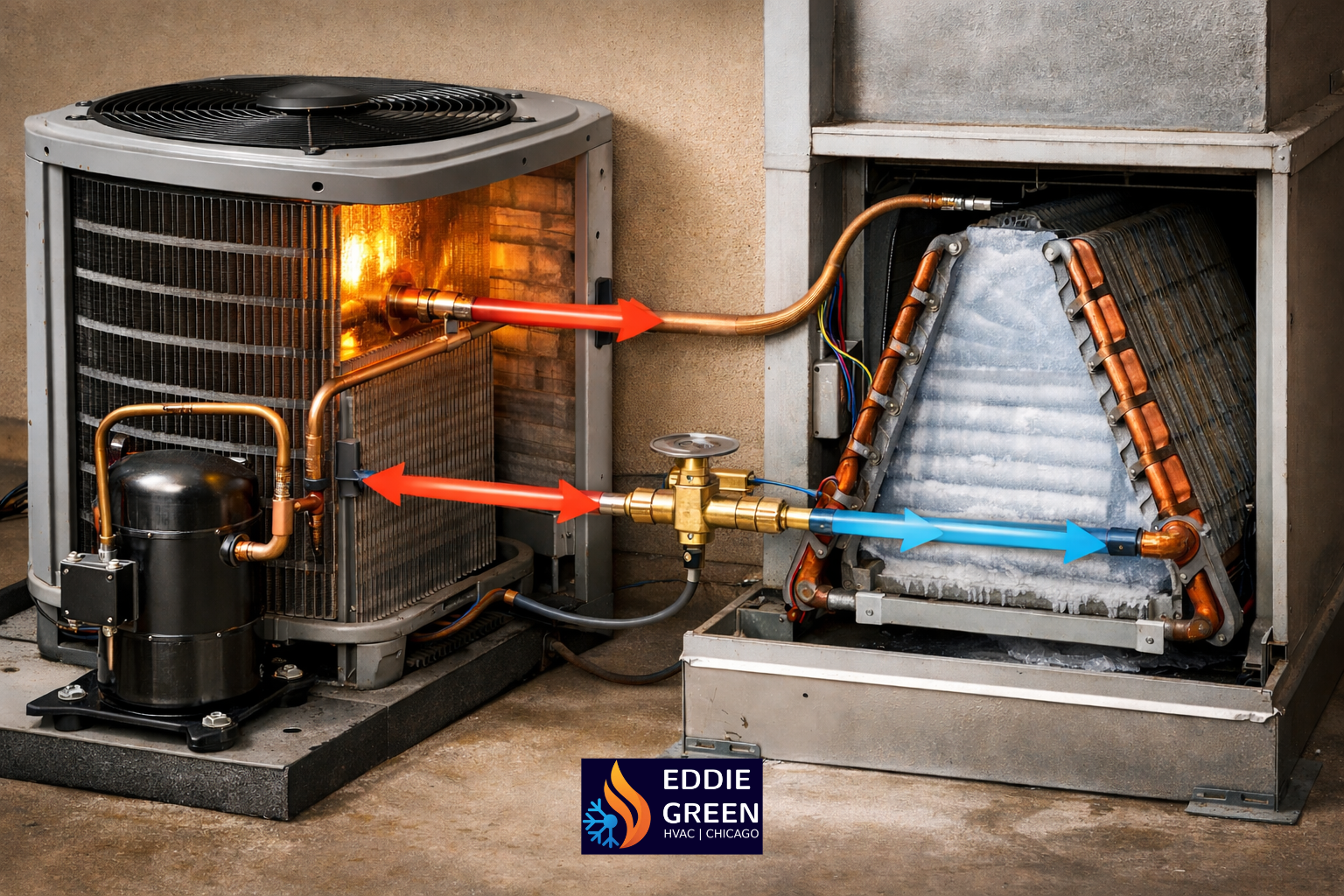
The cycle starts with the compressor. It takes in low-pressure refrigerant vapor and compresses it into a high-pressure, high-temperature gas, making it ready to release the heat it absorbed indoors.
The compressor is like the heart of the system, keeping refrigerant moving. If the compressor is damaged or stressed by poor refrigerant conditions, the whole system can lose efficiency. This is why keeping the right charge levels and doing regular maintenance are key to long-term reliability.
Condensation
After compression, the hot refrigerant gas flows to the condenser coil, where it releases heat to the outdoor air. As the heat leaves, the refrigerant cools and turns back into a liquid. The outdoor fan helps speed up this process by moving air across the condenser coil.
This shows why airflow matters so much. If the outdoor coil is dirty or blocked, the system can't release heat efficiently, forcing the refrigerant to work harder and increasing energy use. For more on HVAC system performance, our article on air ducts and HVAC performance explains how airflow problems affect comfort and efficiency.
Expansion and evaporation
Once the refrigerant turns into a liquid, it passes through the expansion device, which lowers pressure. This pressure drop significantly reduces the refrigerant temperature. The cold, low-pressure refrigerant then enters the evaporator coil inside the building.
As indoor air moves across the evaporator coil, the refrigerant absorbs heat and evaporates into a gas again. This step cools the air before it's distributed through the ductwork. The cycle repeats, creating continuous comfort as long as the system works properly.
Types of Refrigerants and Industry Changes
Traditional refrigerants
For years, HVAC systems used refrigerants like R-22 and R-410A. R-22 was phased out due to its ozone-depleting potential, while R-410A has been widely used as a replacement in many systems. However, environmental concerns are pushing the industry toward newer options with lower global warming potential.
These transitions aren't just about compliance. They also affect equipment design, service procedures, and the long-term availability of parts and refrigerant supplies. Homeowners should know that older systems may need different service strategies than newer models.
Low-GWP refrigerants
Low-GWP refrigerants are a big trend in HVAC. Hydrofluoroolefins, or HFOs, like R-454B, are gaining attention because they offer a smaller environmental impact while supporting efficient operation. Many manufacturers are adopting these alternatives as part of the shift away from higher-GWP refrigerants.
According to industry resources like Trane’s refrigerant overview, the move to lower-GWP options is a big part of the next generation of HVAC systems. For contractors and building owners, staying informed about equipment compatibility, service requirements, and safety considerations is crucial.
Natural refrigerants
Natural refrigerants are also becoming more common in specific applications. Carbon dioxide, ammonia, and hydrocarbons like propane are attracting interest because they provide excellent thermodynamic performance with reduced environmental impact. As Daikin’s refrigerant guide explains, these options are used more in both commercial and residential contexts where they fit the equipment design and safety requirements.
Natural refrigerants aren't a one-size-fits-all solution, but they show where the industry is headed. Their rise reflects a broader commitment to balancing performance, safety, and sustainability.
How Refrigerant Affects Efficiency and Energy Use
Proper charge levels matter.
Refrigerant charge is crucial for system performance. Too little refrigerant can reduce cooling capacity, cause the evaporator coil to freeze, and increase compressor strain. Too much refrigerant can also create problems by disrupting pressure balance and reducing heat-transfer efficiency.
Correct charging allows the system to operate as designed. This means less energy waste, steady temperatures, and longer equipment life. It also lowers the risk of repeated service calls caused by symptoms rather than root problems.
Efficiency and operating costs
Modern refrigerants like R-32 often improve energy performance compared to older options. Efficiency gains depend on the entire system design, but refrigerant choice is still a key part of the equation. Research and manufacturer data consistently show that optimized refrigerants can support lower operating costs and better seasonal performance.
The U.S. Department of Energy notes that regular HVAC maintenance and proper operation play a large role in keeping equipment efficient over time. Learn more at Energy Saver’s air conditioner maintenance guide. Addressing refrigerant issues early means the equipment doesn't have to work as hard to provide the same comfort level.
Comfort is about more than temperature.
Efficiency is important, but refrigerant also affects how comfortable a space feels. When cooling is balanced, indoor temperatures remain more stable, and humidity is easier to control. Rooms feel less sticky and more pleasant, especially during peak summer weather.
If your HVAC system isn't meeting your comfort expectations, the issue might not be the thermostat. It could be refrigerant-related, airflow-related, or a combination of both. Our guide to indoor temperature control can help you understand how refrigerant, humidity, and system sizing work together.
Signs of a Refrigerant Problem
Weak cooling or warm air
One of the clearest warning signs of a refrigerant issue is weak cooling. If your system runs for long periods but the air never feels as cold as it should, the refrigerant charge may be low, or the system may leak. Sometimes, one room cools properly while another remains uncomfortable.
Don't ignore this symptom. A system that's undercharged often continues losing refrigerant until the leak is found and repaired. Running the unit in that condition can damage the compressor and lead to more expensive repairs later.
Ice buildup on coils
Ice on the evaporator coil or refrigerant lines is another common sign. This can happen when refrigerant levels are low, airflow is restricted, or both. Once ice forms, it further blocks heat transfer, making the cooling problem even worse.
While ice might seem like a simple surface issue, it often points to a deeper system problem. If you see frost or ice on your system, turn it off and schedule service. Our HVAC troubleshooting guide can help you identify whether the issue is likely refrigerant-related.
Higher energy bills and longer run times
A refrigerant issue often shows up first on your utility bill. When the system runs longer to reach the same temperature, electricity use rises. Over time, that extra runtime can become a major cost burden.
Long cycling times also suggest the system struggles to move heat efficiently. In that situation, refrigerant service may be needed, but technicians should also check for coil dirt, duct leakage, and thermostat calibration issues before making a final diagnosis.
Leak Detection, Repair, and Maintenance Best Practices
Why leaks must be fixed quickly
Refrigerant doesn't get "used up" like fuel. If levels are low, there’s usually a leak somewhere. That leak needs to be found and repaired before restoring the correct refrigerant charge.
Leaks are important not only because they reduce performance, but also because they raise environmental concerns. Releasing refrigerant into the atmosphere contributes to greenhouse gas emissions, so prompt repair is both a technical and environmental priority.
How technicians find leaks
Professional HVAC technicians use several tools to locate leaks, including electronic leak detectors, pressure gauges, UV dye, and visual inspection methods. Each approach has strengths, and often the best results come from combining several diagnostic techniques.
Accurate leak detection helps avoid guesswork. Recharging a system without repairing the leak is only a temporary fix, and in many cases, it can lead to repeated service calls and higher long-term costs.
Why maintenance is the best prevention
Routine maintenance helps catch refrigerant problems before they become emergencies. During a tune-up, a technician can inspect coils, measure pressures, test temperatures, and check for signs of wear around connections and valves. This preventive service is especially useful before peak cooling season.
To reduce the likelihood of mid-season breakdowns, seasonal care is one of the smartest investments you can make. Our seasonal AC and heating maintenance guide explains what a thorough service visit should include and how it supports system reliability.
Refrigerant Safety and Environmental Regulations
Safety depends on the refrigerant type.
Modern refrigerants are designed to be safe when installed and handled correctly, but different refrigerants have different properties. Some are mildly flammable, some are pressure-sensitive, and some require special handling procedures. That's why only trained technicians should work on sealed refrigeration circuits.
Safety also includes proper ventilation, correct recovery equipment, and following manufacturer instructions. Homeowners should never try to add refrigerant themselves, as incorrect handling can harm both the system and the people around it.
Regulations are driving change.
Environmental regulations are one of the biggest reasons the refrigerant market is changing. Traditional refrigerants with high ozone depletion or global warming potential are being phased down or replaced. This affects product design, service tools, and technician training across the industry.
In practice, this means today’s HVAC contractor must be familiar not just with the equipment, but with the refrigerant laws and service standards that apply to it. Those changes are especially relevant in large metropolitan markets where older systems and new technology often coexist.
Why this matters in Chicago
In a climate like Chicago, HVAC systems work hard in both summer and winter. During hot, humid periods, refrigerant performance directly affects comfort and energy use. For homes and businesses, adopting efficient refrigerants and maintaining equipment properly can lead to noticeable cost savings and fewer disruptions.
For property owners seeking dependable service, our Chicago Downtown team and broader service network can support inspection, repairs, and preventive maintenance with local expertise.
Real-World Examples of Refrigerant Upgrades
R-410A to R-454B transitions
Many HVAC manufacturers are now phasing out R-410A in favor of lower-GWP alternatives like R-454B. This transition is a practical example of how the industry balances performance with environmental responsibility. In many cases, the newer refrigerant supports similar or improved system efficiency while reducing climate impact.
For homeowners, this means replacement decisions are becoming more important than ever. A new system may offer stronger efficiency, updated controls, and better long-term refrigerant availability than an older unit nearing the end of its service life.
Natural refrigerants in commercial settings
In commercial applications, CO2 and ammonia systems are increasingly used where their performance and environmental benefits make sense. These systems can achieve strong efficiency in the right design conditions, especially in food service, industrial cooling, and large-scale refrigeration environments.
The key lesson is that no refrigerant is universally perfect. The best choice depends on safety requirements, equipment design, climate, and the intended application. That is why experienced HVAC professionals continue to play a central role in system selection.
Why a professional assessment matters
Whether you're replacing a residential air conditioner or planning a larger facility upgrade, refrigerant compatibility should be part of the conversation from the start. A professional assessment helps ensure the system will be efficient, compliant, and serviceable over time.
If you're considering a larger change to your equipment, our residential AC installation service includes system selection, duct evaluation, and performance testing so the new unit is matched correctly to your home.
FAQ: Common Questions About Refrigerant
How often should refrigerant levels be checked?
Check refrigerant levels during annual HVAC maintenance, and sooner if you notice cooling problems, ice buildup, or unusual energy bills. Since low refrigerant often points to a leak, waiting too long can make the problem worse. Regular inspections keep the system dependable.
Is it normal for refrigerant levels to go down over time?
No. In a properly sealed system, refrigerant should not disappear. If levels are low, there’s usually a leak or a service issue. Topping off refrigerant without fixing the leak is not a lasting solution.
Are newer refrigerants safe?
Yes, modern refrigerants are safe when used as intended. They may have different handling requirements, but professional technicians are trained to work with them properly. Safety comes from proper installation, correct recovery practices, and following manufacturer and regulatory guidance.
Can refrigerant fix every cooling problem?
No. Refrigerant is only one part of the cooling system. Problems with airflow, thermostat settings, dirty coils, clogged filters, or worn components can all create symptoms that look like refrigerant trouble. A complete diagnosis is always the best approach.
What Homeowners and Businesses Should Do Next
Watch for warning signs early.
The best way to protect your HVAC system is to act early when performance changes. If your system runs longer, cools less effectively, or starts icing up, don’t wait for a complete failure. Small refrigerant issues are often easier and less expensive to correct than major repairs.
Schedule preventive service
Routine maintenance is one of the best ways to protect comfort and manage energy costs. A qualified technician can test refrigerant performance, inspect components, and help determine whether your system is operating safely and efficiently. For homes needing both cooling and heating support, our preventive maintenance service keeps equipment on track throughout the year.
Choose the right partner.
Refrigerant service is technical work requiring experience, the right tools, and knowledge of current regulations. Working with a trusted HVAC contractor ensures the job is done correctly the first time. It also gives you a reliable source for future maintenance, repairs, and replacement planning.
At Eddie Green HVAC, we believe informed customers make better decisions about comfort and efficiency. If you need expert help with refrigerant-related cooling issues, schedule service, ask questions, and let a trained professional guide you toward the right solution. The sooner refrigerant problems are addressed, the better your system will perform for years to come.
Ready to improve comfort and protect your system? Contact Eddie Green HVAC today to schedule an inspection, request a repair estimate, or learn whether your equipment is ready for a refrigerant upgrade.